IB Diploma Programme

What is the International Baccalaureate Diploma Programme?
The International Baccalaureate Diploma Programme (IBDP) is a rigorous and internationally recognised qualification taught in close to 4000 schools spanning roughly 155 countries that prepares students for success at university and beyond. Designed for students aged 16–19, the DP challenges young people to excel academically while developing strong critical thinking, research and communication skills. Its broad and balanced curriculum encourages intellectual curiosity and a global perspective, qualities highly valued by universities and employers worldwide.
What sets the DP apart is its commitment to educating the whole student. Through its unique core components — Theory of Knowledge, the Extended Essay and Creativity, Activity, Service (CAS) — students learn to think deeply, act responsibly and engage meaningfully with the world around them. The result is confident, principled and reflective learners, well equipped to thrive in a rapidly changing global society.
The IB at ISB
At the International School of Budapest, IB students study six subject groups:
- Language and Literature
- Language Acquisition
- Individuals and Societies
- Sciences
- Mathematics
- The Arts
Alongside this, students complete the IB core components:
- The Extended Essay
- Theory of Knowledge
- Creativity, Activity, Service (CAS)
These are the subjects that we currently offer at ISB, though this is modified by cohort depending on demand and staffing. Not all subjects are offered at both higher level and standard level.
| Group 1
Language and Literature |
Group 2
Language Acquisition |
Group 3
Individuals and Societies |
Group 4
Sciences |
Group 5
Mathematics |
Group 6
The Arts |
| English A
Language and Literature |
English B | Business Management | Biology | Mathematics: Applications and Interpretations | Visual Arts |
| Hungarian A
Literature |
Spanish B SL / ab initio | Geography | Chemistry | Mathematics: Analysis and Approaches | |
| Language A
Literature Self-taught |
German B SL / ab initio | History | Physics | ||
| Psychology | Sports, Exercise and Health Science |
Students must pick one subject from each subject group, except group 6. Instead of a group 6 subject, students can choose to double up in another subject group. For example someone interested in studying medicine would forego Visual Arts and double up in group 4 with Biology and Chemistry.
Students choose three subjects at standard level, and three subjects at higher level.
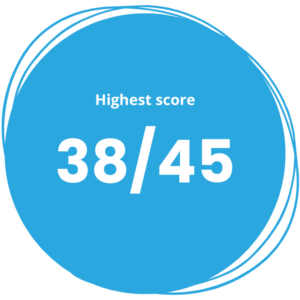
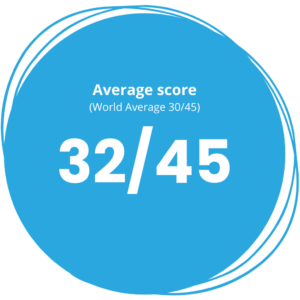
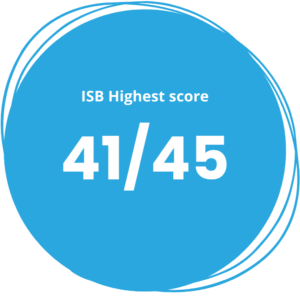
Each subject is graded on a 1-7 scale, with a further 3 points available for the IB core components, giving a total out of 45 for the IB Diploma Programme.
Language A: Literature Self-Taught
The IB provides the opportunity for students to study their first language, even if it is not a subject offered within a particular school. Students can be registered as a school supported self-taught (SSST) student and complete a literature course with the help of a tutor.
At ISB we have a diverse range of nationalities, and have had students complete Language A: Literature courses in Korean, Chinese, Slovak, Polish, Russian, Indonesian, Vietnamese, and Dutch so far.
Mathematics: What is the difference between the two IB mathematics courses?
Mathematics: Analysis and Approaches is best suited to students considering careers that require strong theoretical and analytical skills, such as engineering, physics, mathematics, computer science, economics and medicine.
Mathematics: Applications and Interpretation is well suited to students interested in careers that apply mathematics to real-world contexts, including business, social sciences, psychology, environmental studies, design, health sciences and data-driven fields.

The Cognia American High School Diploma at ISB
The Cognia American High School Diploma is an internationally recognised qualification awarded by Cognia-accredited schools and accepted by universities in the United States and around the world. It provides a flexible senior school pathway that allows students to build a personalised programme of study while still following a rigorous, internationally benchmarked curriculum.
Within this pathway, students take selected IB Diploma Programme courses to meet graduation requirements, without committing to the full IB Diploma. In addition to the 4-5 IB subjects, students study an internal ISB EU and Humanities course, and if they did not pick an IB Mathematics subject, they will also have an internal ISB Mathematics course. This approach offers greater flexibility in subject choice, workload and assessment style, as well as the ability to adapt the pace of study to individual needs and future plans.